Introduction
This summary as "1st Quarter 2026"-Financial Report provides a chronological overview of Digit PaxMentis's asset value development between 1st January and 31st March 2026, demonstrating our commitment to transparent and immutable financial reporting powered by blockchain technology. Each entry represents a snapshot of our certified asset values on the IrohaV2 blockchain, backed by NFTs on Tezos and permanent storage on Arweave.
DPM's innovative approach allows for real-time verification of asset existence and ownership, providing unparalleled trust and clarity for our investors, partners, and community members.
Disclaimer:
The data presented are teaser metrics for potential partners. Detailed cash flows, proprietary methods, performance projections, and execution schedules are not disclosed publicly. Structured 1:1 discussions are available under a signed NDA only.
The Total Asset Value (TAV) includes non-liquid, non-tradable, and non-market-cleared asset components and must not be interpreted as realizable enterprise value. DPM's strategic programs are modular, option-based, and subject to staged execution aligned with partner participation and capital discipline.
Summary (status: 2nd April 2026)
Development Overview & Current Focus Areas
During the 1st Quarter 2026, DPM's operations advanced through a structured expansion of the underlying system, with coordinated progress across infrastructure, asset development, and financial structuring (web3/DeFi).
The reporting period reflects a phase of active build-up, in which multiple components were further developed and aligned within a coherent operational framework. All measures were implemented with a clear focus on resilience, security, and long-term functionality.
The quarter includes the integration of 17 additional (digital) assets into the existing architecture. These assets form part of a broader system design and contribute to its functional depth and scalability. In parallel, infrastructure layers were strengthened, with particular attention to security protocols and the stabilisation of operational processes under evolving external conditions.
Financial structuring progressed through the continued development of tokenised instruments, including certified NFT-based frameworks. These structures support the expansion of financing capabilities and enable new forms of asset-backed participation. In addition, preparatory steps were undertaken to position the system within liquidity provision and market-making environments, supported by ongoing testing and validation processes.
Alongside these technical and financial developments, the core orientation of operations remains anchored in the domain of "media & mental health". Content production and system design are aligned with the objective of supporting individuals & communities in managing increasing cognitive and emotional pressure. - In light of current geopolitical tensions, including the ongoing conflict dynamics involving Iran, the emphasis of content development has shifted further toward strengthening psychological resilience and mental stability through self-care + empowerment.
The overall development of the quarter reflects a progressive consolidation of system components, combined with a continued expansion of functional capabilities. Current efforts are directed toward refining integration, advancing validation processes, and preparing the system for the next stage of implementation. The approach remains measured and structured, with a clear orientation toward sustainable growth and operational readiness.
(A) Strategic Transition: From System Architecture to Operational Resilience
The first quarter of 2026 represents not merely a valuation milestone but a fundamental strategic transition for Digit PaxMentis (DPM). The firm has successfully progressed from the "System Architect" phase into the "System Builder" phase, as outlined in the Dec 31, 2025, Annual Report and validated through 17 individual financial reports published between Jan 2, 2026, and March 31, 2026.
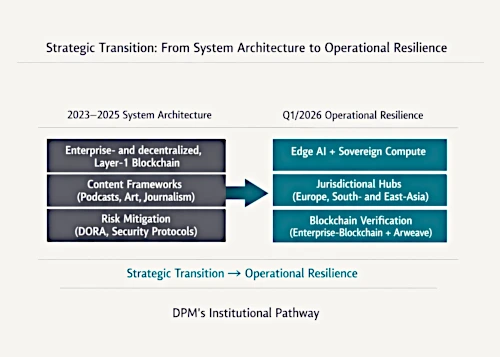
As of March 31, 2026, the certified Total Asset Value (TAV) stands at €387,989,122, representing a verified growth rate of 118.9% over the €177,243,478 reported on December 31, 2025. This growth is not speculative but operationally validated, achieved through the integration of Sovereign AI, Quantum-Resistant collateral standards, and a diversified jurisdictional footprint (Europe, South- and East-Asia).
(B) Operational Sovereignty: A Response to European Instability
The reporting period was defined by unprecedented macro-economic volatility within the European jurisdiction, specifically:
- Critical depletion of energy reserves (jet fuel and petroleum derivatives), as reported by oilprice.com in March/April 2026.
- Geopolitical instability in the Strait of Hormuz renders traditional maritime routes high-risk.
- Regulatory shifts in the EU stablecoin market, with the ban of USDT and the rise of EURC as the dominant stablecoin.
DPM's response has been strategically decisive:
- Transition from centralised, energy-intensive cloud providers to Edge AI with On-Premise Interference, finalised on January 23, 2026.
- Certification of Quantum-Resistant collateral on Tezos, utilising MLDDSA (Lattice-based) signature schemes, as disclosed at ETHCC 9 (March 31 - April 3, 2026).
- Activation of three independent hubs to ensure geographic redundancy and jurisdictional compliance:
- Europe (corporation tax incentive / reduced tax rate)
- South Asia (processors for low-energy AI architecture) and
- East Asia (nuclear-stabilised grid and energy-secure operational environment).
CONSOLIDATED FINANCIAL PERFORMANCE
The Total Asset Value (TAV) for Digit PaxMentis (DPM) increased from €177,243,478 (reported on December 31, 2025) to €387,989,122 by March 31, 2026. This growth of 118.9% is verified and operationally validated through 182 certified asset groups, comprising 7,430 certified units.
Key drivers of this growth:
- January 8, 2026: Integration of the Digital Sanctuary Ecosystem (DSE) ShapeShyft 26, a proprietary behavioural gamification layer for mental health content. This milestone addressed the "Self-Motivation Gap" observed in existing digital health assets.
- March 31, 2026: Certification of the Sovereign Identity Infrastructure (SII) and Quantum-Resistant NFT collateral on Tezos. This ensures the long-term integrity of the asset base against post-quantum compute threats.
Table 1.1: Financial Metrics (Q4 2025 vs. Q1 2026)
| Financial Metrics (Q4 2025 vs. Q1 2026) | Q4 2025 (Dec 31) | Q1 2026 (Mar 31) | Growth (%) |
|---|---|---|---|
| Total Asset Value (TAV) | €177,243,478 | €387,989,122 | +118.9% |
| Real-World Assets (RWA) | €6,369,828 | €10,869,828 | +70.6% |
| Future Asset Value (FAV) | €170,873,650 | €377,119,294 | +120.7% |
| Certified Asset Groups | 148 | 182 | +22.9% |
Narrative Context for Table 1.1
The 118.9% growth in TAV is not arbitrary but operationally validated through the hardening of core Intellectual Property (IP) and the strategic acquisition of resilient Real-World Assets (RWA).
- RWA Growth (+70.6%) reflects the certification of physical infrastructure (e.g., Edge AI hardware, sovereign compute nodes) and the finalisation of jurisdictional hubs in Europe, South Asia, and East Asia.
- FAV Growth (+120.7%) is driven by the integration of Quantum-Resistant NFT collateral on Tezos, the finalisation of the Digital Sanctuary Ecosystem (DSE) ShapeShyft 26, and the certification of the Sovereign Identity Infrastructure (SII) as of March 31, 2026.
STRATEGIC OPERATIONAL PILLARS
2.A. Sovereign AI & Technical Resilience: A Response to Centralised Instability
The first quarter of 2026 was marked by technical volatility in centralised AI models, specifically the Google NotebookLM AI Glitch observed in early February 2026. This incident catalysed an immediate and successful migration of DPM's generative and analytical engines to Edge AI with On-Premise Interference, formalised in the January 23, 2026, Financial Report.
Key outcomes of this transition:
- Elimination of dependency on third-party cloud service providers (e.g., AWS, Google Cloud).
- Assurance of business continuity during periods of European energy grid failure or internet throttling events.
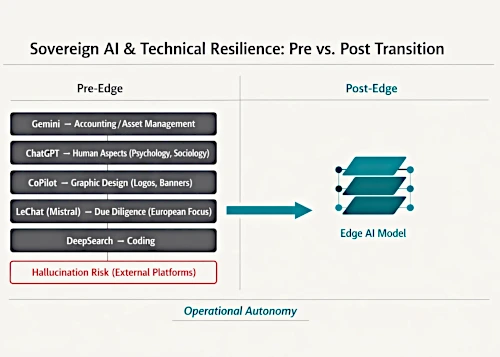
Table 2.A: Edge AI Transition (Pre vs. Post)
| Dependency | Pre-Transition (Jan 2026) | Post-Transition (Mar 2026) |
|---|---|---|
| Third-Party Cloud Providers | AWS, Google Cloud, Azure and others ... | None (Sovereign Compute) |
| Energy Consumption | Centralised (High) | Localised (Low) |
| Operational Continuity | At Risk | Enhanced Resilience and Stabilised |
The Edge AI transition represents not merely a technical upgrade but a fundamental shift in risk management philosophy. By eliminating dependency on centralised, energy-intensive cloud providers, DPM has achieved operational autarky, insulating the firm from European energy grid failures and global internet volatility.
2.B. Quantum-Resistant Collateral
The projected 2029+ quantum compute threat was disclosed during ETHCC 9 (Paris, March 31–April 3, 2026) by Tezos co-founder Arthur Breitman. In response, DPM has verified its existing Tezos-based NFT infrastructure as Quantum-Ready, utilising MLDDSA (Lattice-based) signature schemes for asset registry security.
Impact of this verification:
- Asset base longevity secured for the next decade.
- Immutability of financial reporting ensured through blockchain-anchored hashes.
Table 2.B: Quantum Readiness (Tezos vs. Competitors)
| Blockchain | Quantum Readiness Status | Implementation Date | Reference |
|---|---|---|---|
| Tezos | Quantum-Ready | Feb 04, 2026 / March 31, 2026 | [Agora Forum] / [A. Breitman] |
| Ethereum | Not Ready | N/A | [ETHCC 9] |
| Solana | Vulnerable ("harsh trade-off") | N/A | [CWD] (Video) |
2.C. Systemic Risk Mitigation: A Response to Geopolitical & Energy Instability
The reporting period was defined by unprecedented geopolitical instability in the Strait of Hormuz (rendering traditional maritime routes high-risk) and the critical depletion of European energy reserves (specifically jet fuel and petroleum derivatives).
DPM's response has been strategically proactive:
- Deployment of the Global Stress Barometer (Mar 20, 2026), a geopolitical and systemic risk protocol designed to insulate the portfolio from:
- Energy sector collapse.
- Private equity volatility.
- Regulatory shifts in the EU stablecoin market.
3. MACRO-ECONOMIC CONTEXT & RISK EVALUATION
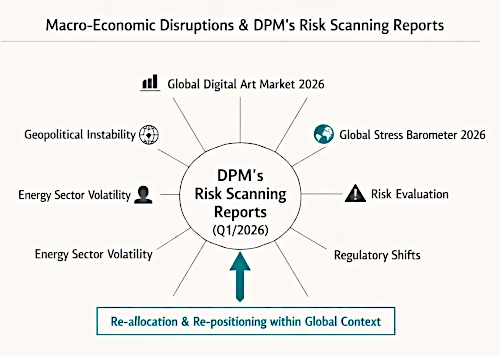
3.1 Energy & Geopolitical Instability: A Defining Feature of Q1/2026
The reporting period was marked by three critical macroeconomic disruptions within the European jurisdiction:
Energy Deficit:
- European strategic reserves of jet fuel and petroleum derivatives are nearing depletion, as reported by oilprice.com in March/April 2026.
- Impact on DPM: The firm's transition to Edge AI with On-Premise Interference and energy-independent operational hubs in South- and East Asia ensures continuity of asset development.
Geopolitical Blockade:
- Mining fields in the Strait of Hormuz render traditional maritime routes high-risk.
- Impact on DPM: The firm's activation of the South- and East Asia hubs provides geographic redundancy and bypasses logistical vulnerabilities.
3.2 Regulatory Shifts
- EU ban on USDT (USDT ban) and the rise of EURC as the dominant stablecoin.
- Impact on DPM: The firm's long-term preference for USDC/EURC discipline and institutional governance ensures compliance and stability.
4. OUTLOOK FOR Q2/2026: THE "TRANSITION & EXIT" STRATEGY
4.1 Jurisdictional Expansion: A Response to European Instability
DPM's operational footprint is undergoing a strategic expansion to three independent hubs, each designed to optimise jurisdictional compliance, tax efficiency, and operational continuity.
Table 4.1: Jurisdictional Expansion Plan (Q2/2026)
| Hub | Primary Benefit | Secondary Benefit | Implementation Window |
|---|---|---|---|
| Europe | Tax Optimization | Compliance Alignment | Q2 2026 |
| South Asia | Low-Cost Compute | Resilient AI Architecture | Q2–Q3 2026 |
| East Asia | Energy-Secure Environment | Asian Expansion | Activated (Q2) |
4.2 Business Continuity Plan (BCP): A Response to the EU's Systemic Energy Instability
The BCP for Q2/2026 is designed to secure energy-independent asset development through a planned jurisdictional relocation.
Key components of the BCP:
- Planned Relocation (Sep–Nov 2026): Secure energy-independent transition to East-Asia and European hubs, bypassing the energy and logistical crises.
- Operational Autonomy: Ensure uninterrupted asset development through ...
- Sustainable transport and media production methods.
- Decentralised communication infrastructure (e.g., Satellite Internet).
Table 4.2: Business Continuity Plan (BCP) – 2026
| Component | Primary Objective | Secondary Objective | Status |
|---|---|---|---|
| Planned Relocation | Energy Independence | Operational Continuity | Planned (Q3/26) |
| Sustainable Transport | Bypass Fuel Crisis | Timely Arrival | Test Phase (Q2/26) |
| Decentralized Communication | Bypass Throttling | Real-Time Data Flow | Planned (Q4/26) |
5. REGULATORY & COMPLIANCE FRAMEWORK
5.1 DORA Compliance: A Response to Third-Party ICT Risk
The EU Digital Operational Resilience Act (DORA, Regulation 2022/2554) imposes strict requirements on ICT third-party risk management for Tier-1 institutions.
DPM's response has been strategically proactive:
- Implementation of "Library-Free" architecture.
- Certification of DORA compliance under DPM's Compliance ID SII-2026-03.
Table 5.1: DORA Compliance – Key Metrics
| Requirement | DPM Implementation Status | Verification Link |
|---|---|---|
| ICT Third-Party Risk Management | Library-Free Architecture | see [Compliance Gateway SII-2026-03 Section A + C] |
| Regulatory Alignment | DORA Compliant | see [Compliance Gateway SII-2026-03 Section A + C] |
5.2 Blockchain Verification: A Response to Auditability & Immutability
All financial reporting data for Q1/2026 is anchored to the IrohaV2 ledger with permanent storage on Arweave, ensuring independent auditability and immutability.
Key outcomes of this verification:
- Asset base transparency secured for institutional partners.
- Regulatory compliance ensured through blockchain-anchored hashes.
Appendix 1: Asset Development Timeline (Q1/2026)
| Date | Asset Contribution | Growth (%) | Asset Groups (Total) |
|---|---|---|---|
| Jan 2, 2026 | SENTINEL ARCHITECTURE + SEEP Policy Framework | +4.46% | 150 |
| Jan 6, 2026 | SVADHYAYA-VAJRA (AI-Native Ecosystem) | +3.06% | 152 |
| Jan 7, 2026 | IRPS (Institutional Resilience Portfolio) | +0.23% | 154 |
| Jan 8, 2026 | Digital Sanctuary Ecosystem (DSE) ShapeShyft 26 | +55.22% | 156 |
| Jan 23, 2026 | Sovereign AI – Edge AI with On-Premise | +9.62% | 158 |
| Jan 25, 2026 | NFT-Collateralised Micro-Financing (DeFi Test) | +0.07% | 160 |
| Jan 31, 2026 | TDD – The Digital Dispatch (TragedyComic "Project L") | +3.91% | 162 |
| Feb 4, 2026 | MindTraceStudio (MTS) Protocols | +1.46% | 164 |
| Feb 10, 2026 | TDC System – Institutional Infrastructure | +4.04% | 166 |
| Feb 17, 2026 | Global Digital Art Market Report 2026 | +0.21% | 168 |
| Feb 18, 2026 | Forensic Sanitisation Gate (FSG) System | +1.08% | 170 |
| Feb 20, 2026 | Vantage Sovereign Protocol (VSP) | +1.25% | 172 |
| Feb 24, 2026 | nbCDM – Non-Bureaucratic Cognitive Dashboard | +1.15% (Low) | 174 |
| March 10, 2026 | Cognitive Resilience Framework (CRF) – Anti-Fragile System LifeLab | +0.30% | 176 |
| March 20, 2026 | Global Stress Barometer 2026 | +3.35% | 178 |
| March 27, 2026 | Risk Evaluation – Global Financial Crisis 2026–2027 | +0.66% | 182 |
| March 31, 2026 | Sovereign Identity Infrastructure (SII) Certification | +0.35% | 182 |
Final Notes: All financial data operationally certified through 17 individual reports.
Appendix 2: DPM's Compliance Gateway
- Section A: "Digital Operational Resilience (DORA)"
→ Directly validates the "Library-Free Architecture" claim. - Section C: "Governance & Technical Standards"
→ Validates "DORA Compliance" and human-in-the-loop control.
Conclusion: Transition from Systemic Architecture to Operational Building
- The Q1 2026 reporting cycle concludes the formal "Architecture Development" phase.
- The certification of the Sovereign Identity Infrastructure & Governance Protocol (SII-2026-03) on March 31, 2026, establishes the technical baseline for the subsequent "Architecture Building" phase.
- The Total Asset Value (TAV) of €388,634,721 (recorded as of April 2, 2026) reflects the finalised consolidation of assets within the IrohaV2 ledger.
- This transition shifts the firm’s focus from infrastructure design to operational deployment.
- In accordance with internal risk management protocols, the "Human-in-the-Loop" control framework remains the mandatory oversight mechanism for all systemic transitions and strategic asset deployments.
Final Note: Regulatory Alignment and Systemic Resilience
This report has been structured to comply with the disclosure requirements of the Digital Operational Resilience Act (DORA) and the Corporate Sustainability Due Diligence Directive (CSDDD). The technical architecture is engineered to mitigate ICT third-party concentration risk by utilising a library-free, blockchain-anchored infrastructure. By aligning the digital identity and ledger layers with the Markets in Crypto-Assets (MiCA) Regulation (EU) 2023/1114, the firm maintains the technical requirements for interoperability within the European institutional financial framework. This alignment ensures that the operational resilience of the asset base is verified against current regulatory mandates. (Reference: Compliance ID SII-2026-03).
📊 Asset Value Development on Blockchain (Chronological Overview)
| Date | Asset Value (€) | Δ in EUR | Δ in % | Comment |
|---|
📈 Key Performance Indicators
Total Added:
Percentage Gain:
Time Frame:
🧠 Key Drivers of Growth (related to the Quarterly Financial Report Q1/2026)
- FDS - Financial & Distribution Systems (RWA): €45,600.00
- SOI - Strategic Operational Infrastructure (FAV): €600,000.00 (based on a projected impact value during Q2-Q3/2026)
🗓️ Next Report
Next report to be expected on date: [Date]